Friday, August 15, 2014

Scientists Report Genetic Abnormalities In Birds, Insects, Plants Near Fukushima


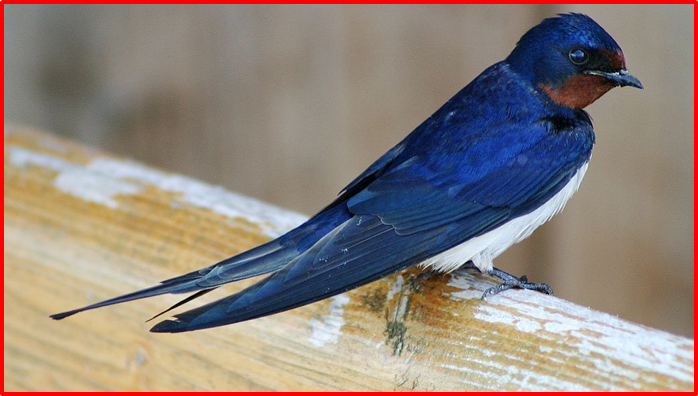
Barn swallow (image from wikipedia.org by Malene Thyssen)

Fukushima’s nuclear disaster has caused genetic damage, a decline in the population and other changes to non-human organisms from plants to butterflies to birds in the area, US and Japanese scientists say.

In a series of articles published in the latest of US science magazine Journal of Heredity, researches revealed the widespread impact of the March 2011 Fukushima nuclear disaster on biological organisms in the region.

“A growing body of empirical results from studies of birds, monkeys, butterflies, and other insects suggests that some species have been significantly impacted by the radioactive releases related to the Fukushima disaster,” stated Dr. Timothy Mousseau, of the University of South Carolina, lead author of one of the studies.

Scientists of all the studies agreed that chronic low-dose exposure to ionizing radiation leads to genetic damage and increased mutation rates in reproductive and non-reproductive cells.

In one study, Mousseau compared effects on non-human organisms of the Fukushima catastrophe with the 1986 nuclear disaster in Chernobyl, Ukraine.

Barn swallows with abnormal white spots on their plumage were found near the Chernobyl plant after the disaster while similarly plumaged swallows in Fukushima were also reported in the wake of the 2011 crisis, the researcher said.

“Barn swallows with aberrant white feathers were first detected in Fukushima in 2012 and were observed in increasing frequencies in 2013 and 2014. Although such partial albinos are believed to have reduced probabilities of survival, there are sufficient data to suggest that this character can be inherited and may at least in part result from a mutation(s) in the germline, based on parent–offspring resemblance,” the study said.
Workers prepare frozen pipes for the construction of an ice wall at the tsunami-crippled Tokyo Electric Power Co.'s Fukushima Daiichi Nuclear Power Plant in Okuma, Fukushima Prefecture (AFP Photo / Pool / Kimimasa Mayama)

Mousseau said that researchers were monitoring these species for signs of population decline due to abnormalities in mitochondrial DNA, since the same problem was reported in Chernobyl.
Genetic mutations have been previously found in three generations of pale grass blue butterflies living near the crippled Fukushima plant. Researchers found size reduction, slowed growth, high mortality and morphological abnormality both at the Fukushima site and among laboratory-bred butterflies with parents collected from the contaminated site.

“Non-contaminated larvae fed leaves from contaminated host plants collected near the reactor showed high rates of abnormality and mortality,” explained Dr. Joji Otaki of the University of the Ryukyus in Okinawa, Japan.

Researchers also suggested that there may be possible evolution of radiation resistance in Fukushima butterflies as well.

Another study showed the impact of radiation on rice. Healthy seedlings were exposed to low-level gamma radiation at a contaminated site in Fukushima Prefecture. After three days, such effects as activation of genes involved in self-defense, ranging from DNA replication and repair to stress responses to cell death were observed.

Mousseau called for continuing studies at Chernobyl which could predict likely effects in the future at the Fukushima site. Following the Chernobyl nuclear power plant meltdown scientists were able to obtain biological samples for research after extensive delays which resulted in limited information on the impacts. At Fukushima scientists began collecting information only a few months after the catastrophe, which enabled them to reveal the serious effects on non-human organisms.

"Detailed analyses of genetic impacts to natural populations could provide the information needed to predict recovery times for wild communities at Fukushima as well as any sites of future nuclear accidents," Mousseau said. "There is an urgent need for greater investment in basic scientific research of the wild animals and plants of Fukushima."
The findings raise fears over the long-term effects of radiation on people who faced exposure in the days and weeks following the disaster.

Culled from RT.com 

Thursday, August 14, 2014

Great Barrier Reef In 'Worst State Since Records Began', Scientists Say


A tourist swims on the Great Barrier Reef (Reuters / HO / Great Barrier Reef National Park Authority)

The Great Barrier Reef off Australia’s east coast is “in the worst state since records began” and in 40 years large swathes of coral structures will be replaced by seaweed and algae, scientists told a senate inquiry.

A senate committee heard from scientists from the Australian Coral Reef Society and the University of Queensland, who gave evidence before the first hearing of the inquiry in Brisbane, Queensland, on Monday, reports the Australian Associated Press.

They are investigating how the Australian and Queensland governments have been managing the reef, and will decide with UNESCO next year if it should be listed as a world heritage site in danger.

Thursday, June 19, 2014

Beyond the World Cup's Cushy FIFA Bubble, Real Life Goes On

This blog was is not really participating or sharing about the on-going FIFA World Cup, Brazil 2014, in solidarity with the families of those who lost their lives while constructing some of the stadia being used for the competitions. 

However, Sam Laird is in Brazil, working for Mashable. This blog shares this human angle post of Sam's take on real life in Manaus, located in Amazonas, the fourth-poorest of Brazil's 26 states.

Here is his story...

Arena da Amazonia stadium, in Manaus, Brazil, as seen while still under construction on Dec. 10, 2013.
Image: Renata Brito/Associated Press

Sam Laird/Mashable
Wednesday, 18th June, 2014

MANAUS, Brazil — If you spend enough time in FIFA's air-conditioned World Cup media center, where bean-bag chairs let you stretch your back and the Wi-Fi is good and plentiful and everyone has a smartphone and a laptop and a fancy digital camera, if you spend enough time bullshitting with other journalists and tourists from England and Italy and the United States, you can almost forget the absurdity of where you are and the contradictions surrounding your being here.

You can almost forget three workers died building the Arena da Amazonia, the massive $300 million structure where you're stationed. You can almost forget that stadium was built in Manaus, a city with no major soccer team that can realistically come anywhere near filling the place after it hosts the four World Cup matches it was built for.

You can almost forget Manaus is located in Amazonas, and that Amazonas is the fourth-poorest of Brazil's 26 states, a place where a quarter of inhabitants live in extreme poverty, according to the World Bank. 

You can almost forget that just this sort of poverty is endemic to Brazil's extreme income inequality. You can almost forget where you are epitomizes the anger behind large-scale protests against the 2014 World Cup and 2016 Olympics coming to Brazil when more important tasks like education and healthcare could use attention and funding.

Almost. 

So, after two days in the cushy bubble of the World Cup industrial complex, I set off in search of the "real" Manaus

So, after two days in the cushy bubble of the World Cup industrial complex, I set off in search of the "real" Manaus, or at least something like it. My two goals that Sunday afternoon were simple. 

First, get a little bit lost. Second, don't get stabbed or robbed. Brazilians in the States told me both were distinct possibilities in this third-world city of more than 1.5 million people surrounded by Amazon jungle and reachable only by boat or airplane.

Empty net: A soccer court sits unused in Manaus' sweltering afternoon sun.
Image: Sam Laird/Mashable

Even while staying far from the favelas where most of the city's reported 945 homicides in 2012 occurred, it's not hard to get a look at life beyond the FIFA-spun cocoon centered around Arena da Amazonia. In front of some shuttered store fronts, homeless-looking men without shirts or shoes leaned against closed gates, their bodies so caked in dirt that their skin was nearly pitch black in patches. Mangy stray dogs loped from shade spot to shade spot, their tongues hanging lifelessly from open jaws.

Cinder-block homes stacked precariously on top of one another peppered the town's ravines and small hillsides. Steep staircases led down to neighborhoods of twisting streets where jeans, T-shirts and replica soccer jerseys dried on clotheslines, offering a strong contrast to the cheap plastic World Cup streamers that arched over other streets around town. Down those winding neighborhood paths, men in flip-flops sat languidly under shade trees to escape the punishing afternoon heat.

Elsewhere, families enjoyed the afternoon in gated front patios. Men at small bars played cards as TVs blared in the background. At the Millennium shopping mall food court, men, women and children watched France play Honduras on big-screen projectors and young women with impeccable English staffed a temporary information desk where they answered questions and kept a running tally of where World Cup visitors came from.

Figuratively, if not geographically, far from the World Cup spotlight, a man in a no. 9 Brazil shirt begs for money from passing motorists in Manaus.
Image: Sam Laird/Mashable

The city was gritty, but filled with every day people doing everyday things, including the biggest contrast to World Cup FIFA Land — the beggars. At one intersection along Djalma Batista, a six-lane street that cuts through the middle of town, a scrawny and haggard young man who could have passed for any age between 13 and 30 wanly offered to squeegee windshields during red lights in hopes of accumulating spare change. At another, a man in a no. 9 Brazil jersey wandered through stopped traffic in hopes of donations.
But my Sunday experience is perhaps best illustrated by a story from Saturday night.

England and Italy play in their opening World Cup Group D match at the Arena da Amazonia in Manaus, Brazil, Saturday, June 14, 2014. The stadium will go largely unused after hosting four World cup matches.

The night prior, a few hours after watching England lose to Italy at the Arena da Amazonia on Saturday, I met a World Cup volunteer and Manaus resident named Carlos. Carlos is one of a swarm of volunteers who wear bright blue and yellow hats and shirts made by Adidas, one of the tournament's official sponsors. They help keep the stadium, and others like it, running.

They answer questions, guide you to where you need to go and stand as smiling sentries in front of doors you're not supposed to pass through.

2014 World Cup volunteers' uniforms, made by Adidas, were unveiled on April 10, 2014, during Rio Fashion Week at an even featuring former soccer star Cafu and Brazilian model Fernanda Lima in Rio de Janeiro.
Image: Felipe Dana/Associated Press

Late that night after the match, I was half-waiting-half-hoping in the dark for a cab on Rua Lores Cordovil, a darkened road on the less populated side of the stadium near the media entrance. Carlos — a short, heavy-set guy with glasses who looked about 30 years old and was — exited the same gate I had about five minutes prior, still wearing his bright volunteer's outfit. 

I was in the wrong place for a cab, Carlos said. Come, he said, he'd take me around to the other side of the stadium, to Avenida Constantino Nery, where taxis pass more frequently. I followed, and we started to talk, and after a couple minutes I took out my notebook.

Carlos said he was glad the World Cup had come to Manaus. Then he went on. 

"Yes, I'm happy it comes to Manaus," he said in his proficient but imperfect English, with a nod toward the stadium on our right. "We know the stadium is too big. We know the football here isn't big enough for it.

We call it a white elephant. You know this term?

I assured him I did. It has been used by the American media for some time with reference to Manaus and its new stadium. 

Carlos said that, yes, I could use his quotes for an article, but that he couldn't give his last name because, he said, "my boss is from FIFA." (I later learned from other volunteers and supervisors that the World Cup volunteers aren't permitted to discuss, you know, the actual World Cup.)

The 2014 World Cup is certainly not the only evidence of commercialized globalization in Manaus.
Image: Sam Laird/Mashable

I asked him why he volunteered to work for free.

"It's because like right now, I'm talking to you," Carlos said. "I hope you and people like you come to Manaus. I hope you like Manaus, and you come back or you tell your friends it's a good place to visit. Or maybe people start to invest here. I want it to help Manaus." 

My exploration of Manaus beyond the bubble brought no robberies — which would have been a dramatic denouement, to be sure, yet was obviously for the best. Perhaps the warnings were overblown. But the walk did bring a deeper look into the World Cup's most bizarre, extreme and inexplicable host city. 

Does a half-day kicking about in the humid dust and wandering down side-streets and staring at locals make you any sort of expert on what is or isn't the "real" Manaus — or any other place for that matter?

Of course it doesn't. It can feel voyeuristic and exploitative, at times. But here and now, amid the World Cup and all its paradoxical splendor, it's worth doing anyway.


All rights reserved. Mashable.com 2014.